 Bestseller
Diploma in Nursery Teacher Training (DNTT) – 2 Years
Course Description
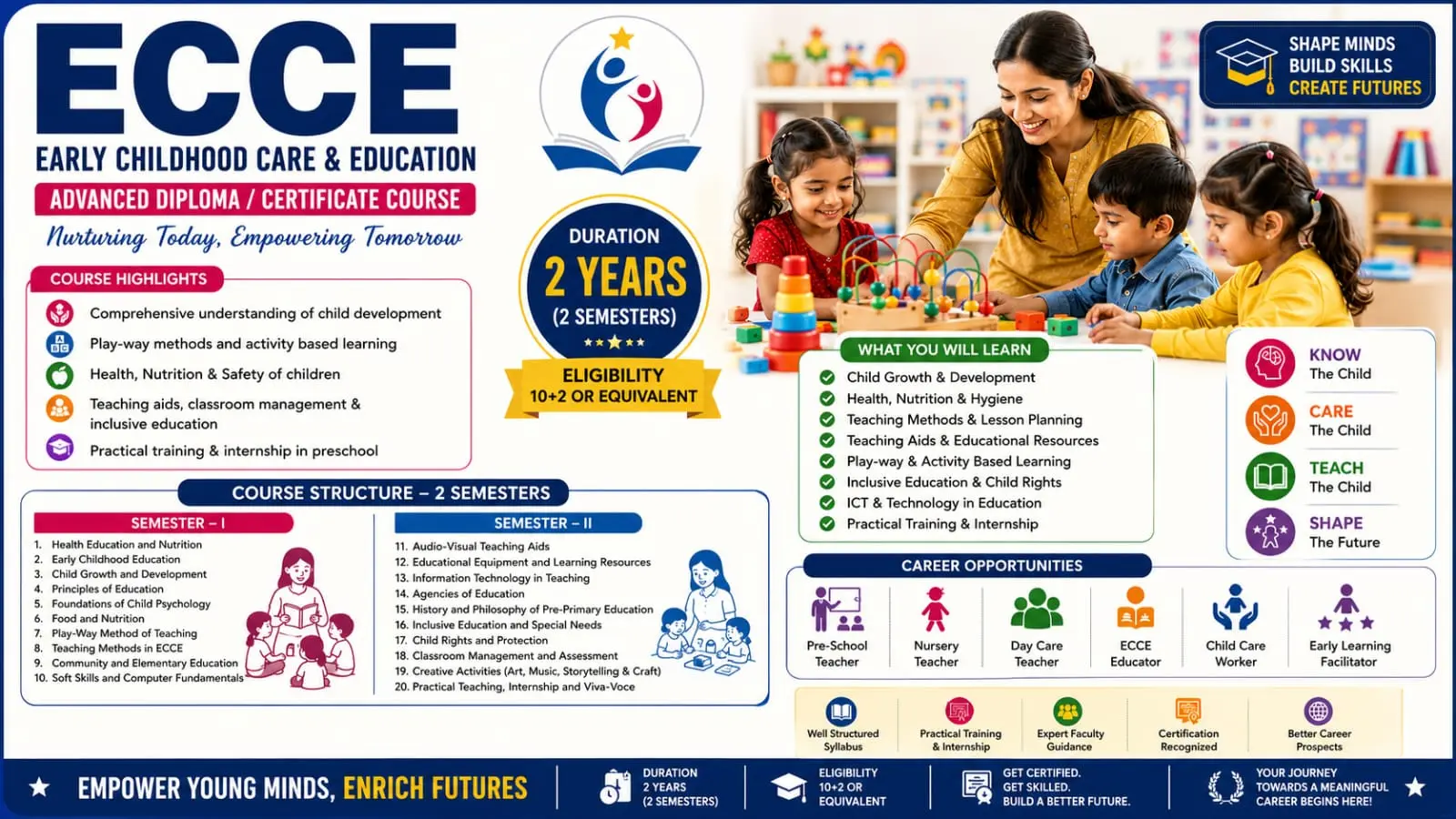
The Diploma in Nursery Teacher Training (DNTT) is a two-year professional teacher education programme designed to prepare teachers for preschool, nursery, kindergarten, and primary education. The course develops knowledge of child growth and development, educational psychology, teaching methods, classroom management, educational technology, health and nutrition, inclusive education, and practical teaching skills. It combines theory with practical training, enabling learners to create a safe, engaging, and child-centred learning environment.
Duration: 2 Years (24 Months)
Eligibility: 10+2 (Senior Secondary) or equivalent
Total Marks: 2000 (1000 per year)
Teaching Practice: Mandatory
Internship: Preschool/Primary School
First Year Syllabus
Subject 1: Theory of Education
Description:
Meaning and aims of education
Philosophy of education
Teacher's role and ethics
Educational system in India
Principles of teaching-learning
Subject 2: Pedagogic Process in Elementary Schools
Description:
Teaching-learning process
Lesson planning
Child-centred teaching
Teaching strategies
Classroom organization
Subject 3: Elementary Education in India
Description:
History of elementary education
National Education Policy
RTE Act
School administration
Educational schemes
Subject 4: Early Childhood Education
Description:
Importance of ECCE
Child development
Learning through play
Preschool curriculum
Creative learning
Subject 5: Working with Parents & Community
Description:
Parent-teacher partnership
Community participation
School-community relationship
Home visits
Parent counselling
Subject 6: Teaching Methods
Description:
Language teaching
Mathematics teaching
Environmental Studies
Storytelling
Activity-based learning
Subject 7: Principles of Teaching
Description:
Teaching principles
Motivation
Classroom communication
Teaching aids
Evaluation methods
Subject 8: Health Education & Nourishment
Description:
Child health
Nutrition
Hygiene
First aid
Growth monitoring
Subject 9: Practical-I
Description:
Lesson plans
Teaching aids
Classroom observation
Activity file
School visit
Subject 10: Viva-Voce
Description:
Oral examination
Teaching skills
Communication
Professional attitude
Second Year Syllabus
Subject 1: Principles of Education
Description:
Educational philosophy
Modern teaching trends
Professional ethics
Child-friendly schools
Subject 2: Soft Skills & Computer
Description:
Communication skills
Personality development
MS Word
PowerPoint
Internet and Email
Subject 3: Audio Visual Equipment
Description:
Educational technology
Smart classroom
Charts and models
Multimedia teaching
Digital learning tools
Subject 4: Play Way Methods
Description:
Learning through play
Montessori activities
Froebel method
Kindergarten activities
Indoor & outdoor games
Subject 5: Use of IT in Teaching
Description:
ICT in education
Online teaching
Digital content creation
Educational apps
E-learning tools
Subject 6: Subject Teaching Methods-II
Description:
Advanced teaching methods
Activity-based learning
Inclusive teaching
Classroom assessment
Remedial teaching
Subject 7: Agencies of Education
Description:
Family
School
Society
Government agencies
NGOs in education
Subject 8: History and Philosophy of Pre-Primary Education
Description:
History of preschool education
Montessori
Froebel
Gandhi
Tagore
Modern preschool education
Subject 9: Community & Elementary Education
Description:
Community participation
School development
Social awareness
Educational programmes
Child welfare
Subject 10: Practical-II (Teaching Practice & Internship)
Description:
Internship in preschool
Classroom teaching
Lesson delivery
Project work
Record file
Teaching portfolio
Learning Outcomes
After successful completion of the course, students will be able to:
Understand child psychology and development.
Plan and deliver effective preschool lessons.
Use modern teaching methods and educational technology.
Develop child-friendly learning environments.
Manage classrooms effectively.
Work collaboratively with parents and the community.
Promote children's health, safety, and holistic development.
Apply ICT and digital tools in teaching.
Perform confidently as Nursery, Kindergarten, Preschool, and Primary School Teachers.
Diploma in Nursery Teacher Training (DNTT) – 2 Years
Course Description
The Diploma in Nursery Teacher Training (DNTT) is a two-year professional teacher education programme designed to prepare teachers for preschool, nursery, kindergarten, and primary education. The course develops knowledge of child growth and development, educational psychology, teaching methods, classroom management, educational technology, health and nutrition, inclusive education, and practical teaching skills. It combines theory with practical training, enabling learners to create a safe, engaging, and child-centred learning environment.
Duration: 2 Years (24 Months)
Eligibility: 10+2 (Senior Secondary) or equivalent
Total Marks: 2000 (1000 per year)
Teaching Practice: Mandatory
Internship: Preschool/Primary School
First Year Syllabus
Subject 1: Theory of Education
Description:
Meaning and aims of education
Philosophy of education
Teacher's role and ethics
Educational system in India
Principles of teaching-learning
Subject 2: Pedagogic Process in Elementary Schools
Description:
Teaching-learning process
Lesson planning
Child-centred teaching
Teaching strategies
Classroom organization
Subject 3: Elementary Education in India
Description:
History of elementary education
National Education Policy
RTE Act
School administration
Educational schemes
Subject 4: Early Childhood Education
Description:
Importance of ECCE
Child development
Learning through play
Preschool curriculum
Creative learning
Subject 5: Working with Parents & Community
Description:
Parent-teacher partnership
Community participation
School-community relationship
Home visits
Parent counselling
Subject 6: Teaching Methods
Description:
Language teaching
Mathematics teaching
Environmental Studies
Storytelling
Activity-based learning
Subject 7: Principles of Teaching
Description:
Teaching principles
Motivation
Classroom communication
Teaching aids
Evaluation methods
Subject 8: Health Education & Nourishment
Description:
Child health
Nutrition
Hygiene
First aid
Growth monitoring
Subject 9: Practical-I
Description:
Lesson plans
Teaching aids
Classroom observation
Activity file
School visit
Subject 10: Viva-Voce
Description:
Oral examination
Teaching skills
Communication
Professional attitude
Second Year Syllabus
Subject 1: Principles of Education
Description:
Educational philosophy
Modern teaching trends
Professional ethics
Child-friendly schools
Subject 2: Soft Skills & Computer
Description:
Communication skills
Personality development
MS Word
PowerPoint
Internet and Email
Subject 3: Audio Visual Equipment
Description:
Educational technology
Smart classroom
Charts and models
Multimedia teaching
Digital learning tools
Subject 4: Play Way Methods
Description:
Learning through play
Montessori activities
Froebel method
Kindergarten activities
Indoor & outdoor games
Subject 5: Use of IT in Teaching
Description:
ICT in education
Online teaching
Digital content creation
Educational apps
E-learning tools
Subject 6: Subject Teaching Methods-II
Description:
Advanced teaching methods
Activity-based learning
Inclusive teaching
Classroom assessment
Remedial teaching
Subject 7: Agencies of Education
Description:
Family
School
Society
Government agencies
NGOs in education
Subject 8: History and Philosophy of Pre-Primary Education
Description:
History of preschool education
Montessori
Froebel
Gandhi
Tagore
Modern preschool education
Subject 9: Community & Elementary Education
Description:
Community participation
School development
Social awareness
Educational programmes
Child welfare
Subject 10: Practical-II (Teaching Practice & Internship)
Description:
Internship in preschool
Classroom teaching
Lesson delivery
Project work
Record file
Teaching portfolio
Learning Outcomes
After successful completion of the course, students will be able to:
Understand child psychology and development.
Plan and deliver effective preschool lessons.
Use modern teaching methods and educational technology.
Develop child-friendly learning environments.
Manage classrooms effectively.
Work collaboratively with parents and the community.
Promote children's health, safety, and holistic development.
Apply ICT and digital tools in teaching.
Perform confidently as Nursery, Kindergarten, Preschool, and Primary School Teachers.
Copyright © 2026 DITRP INDIA. All Rights Reserved